Systems
Home battery storage & backup power
A home battery stores electricity for later use, usually from solar or the grid, so you can keep some parts of the house running during an outage and shift when you use power. The right setup depends on what you want to back up, how long you want it to last, and whether your roof and electrical system are a good fit.
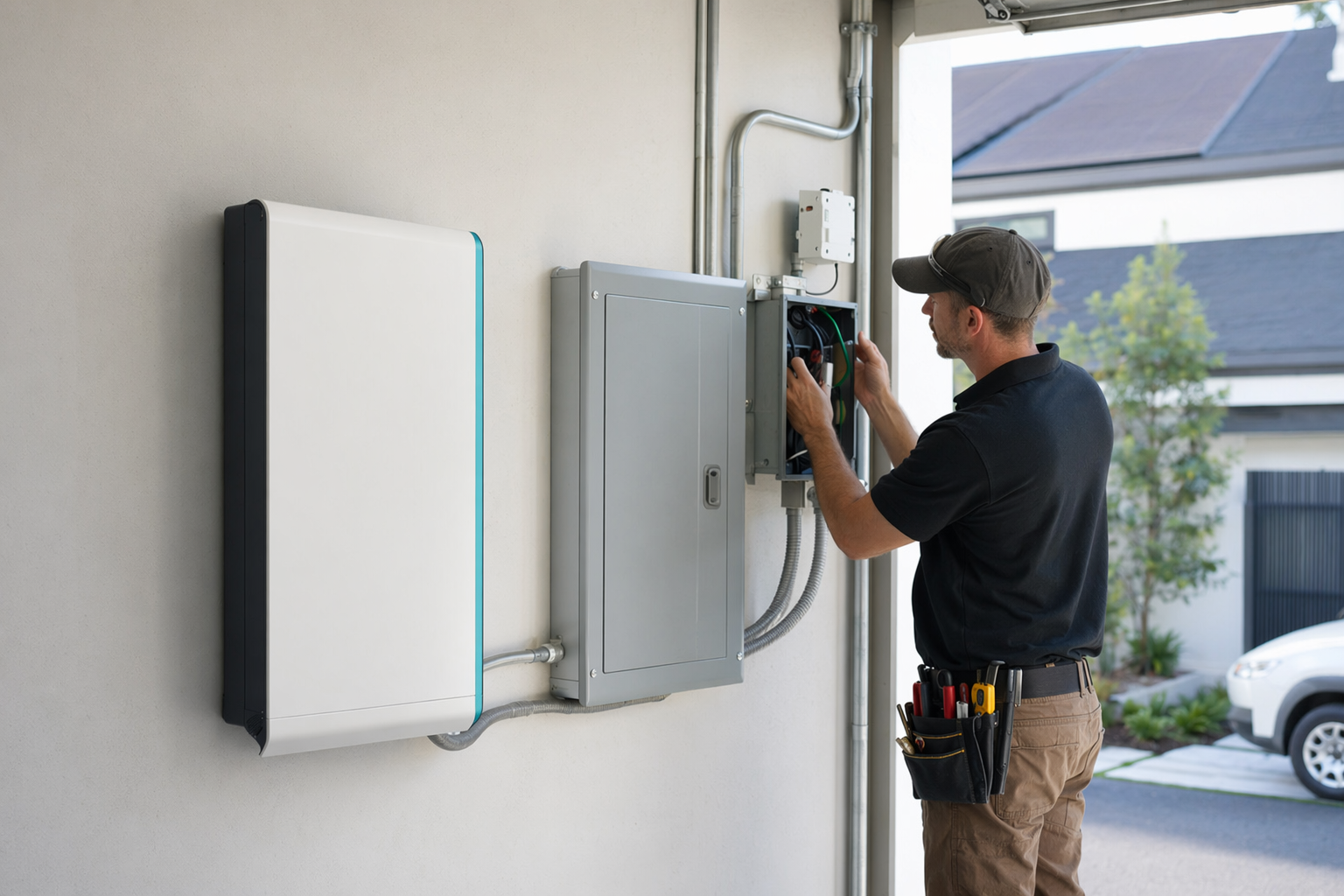
What a home battery does
A battery stores energy in kilowatt-hours (kWh). Think of kWh as the size of the tank. During normal operation, the battery can charge from rooftop solar and, in some homes, from the grid when rates are lower. When the power goes out, the battery can send stored electricity back to selected home circuits.
Most homeowners do not back up the entire house unless they install a larger battery setup. A more common approach is to back up essentials such as the refrigerator, internet equipment, a few lights, garage door opener, some outlets, and sometimes a furnace blower or well pump. Large loads like central air conditioning, electric resistance heat, ovens, dryers, and pool equipment may need more battery capacity or may be left off the backup panel.
If you are still comparing equipment and layouts, it helps to first understand your systems options. The battery is only one part of the plan. The roof condition, solar array size in kW, inverter setup, and the electrical panel all matter too.
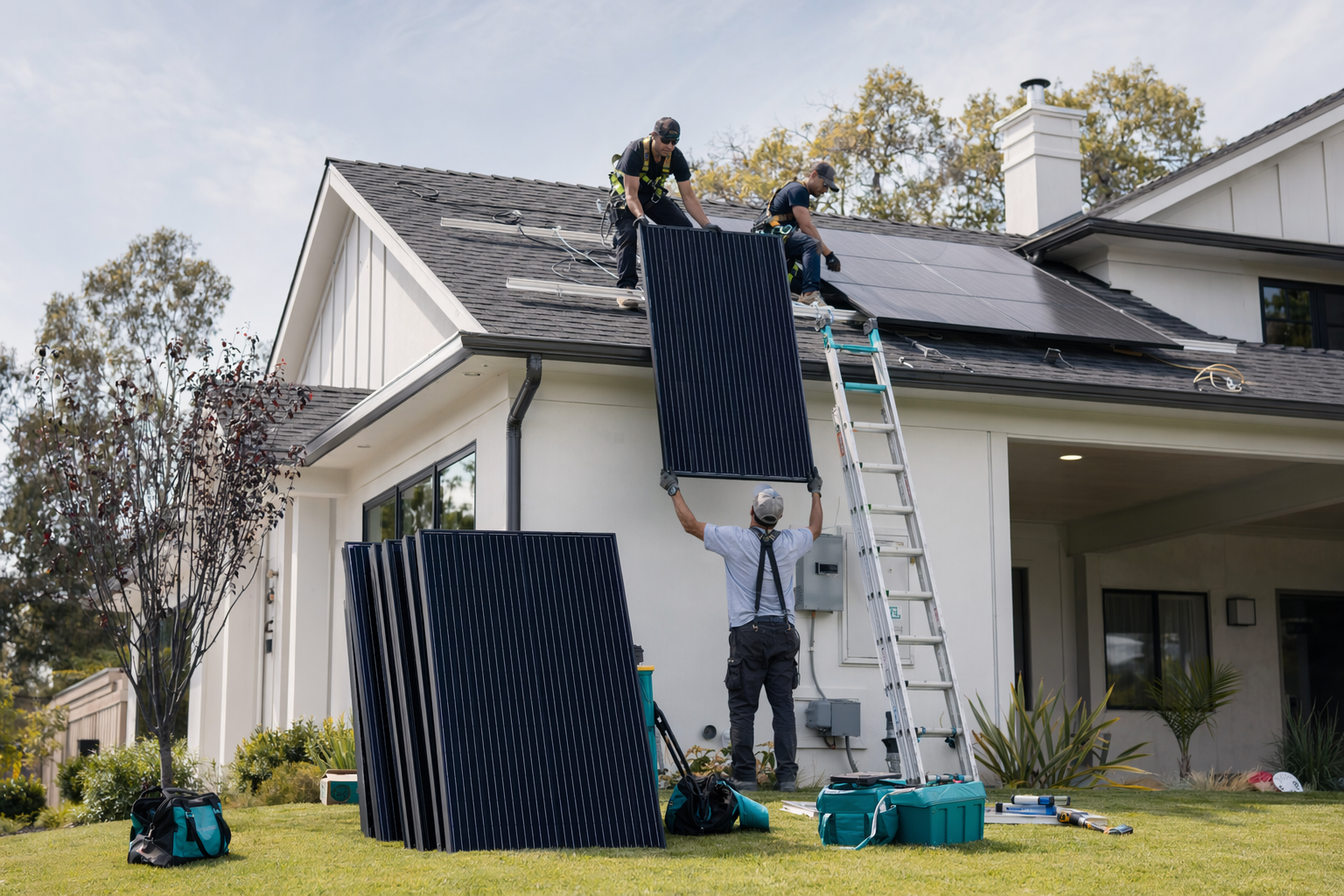
How to think about battery size
Battery size is measured in kWh, while solar panel systems are measured in kW. A kW number tells you how much power equipment can deliver at one time. A kWh number tells you how much energy a battery can store. For outage planning, both matter.
As a rough example, a battery in the 10-15 kWh range may cover essentials for part of a day, or longer if usage is light and solar can recharge it. A larger setup, or multiple batteries stacked together, can support more circuits or run longer. Real backup time depends on what is turned on. Running a refrigerator, lights, and internet is very different from running air conditioning or electric heat.
A practical way to size a battery is to list the loads you care about most:
- refrigerator and freezer
- internet and phone charging
- lighting in key rooms
- medical devices if needed
- sump pump or well pump
- garage door opener
- furnace blower or mini-split, if compatible
An installer can estimate how many hours of backup those essentials may get from different battery sizes. Ask for that estimate in writing, along with which circuits are included and which are not.
Solar plus battery vs battery without solar
A battery can work with rooftop solar, and in some cases without solar, but the experience is different. With solar, the battery may recharge during the day and extend backup during a longer outage if sunlight is available. Without solar, the battery is limited to the energy stored before the outage unless the system is designed to recharge from the grid when grid power returns.
Not every existing solar system can simply add a battery without changes. Some homes need a new inverter, additional controls, or electrical panel work. Others may need roof work first if the roof is older and the solar array would need to come off later. That is one reason homeowners often compare battery options together with costs and roof-readiness instead of treating the battery as a stand-alone purchase.
If you already have solar, ask whether the proposed battery setup will support backup power during an outage or only store energy for time-of-use shifting. Those are not always the same. You should also ask whether solar charging during an outage is included and what operating limits apply.
What affects price and installation complexity
Battery pricing varies a lot. Broadly, homeowners may see installed price ranges from the high four figures into the low-to-mid five figures per battery unit or small backup setup, and more for larger multi-battery systems, panel upgrades, or added solar work. Exact pricing depends on battery capacity in kWh, continuous power output, whether multiple batteries are stacked, inverter type, electrical upgrades, permitting, labor, and local requirements.
Installation complexity can increase if the home has an older main panel, limited wall space, long wiring runs, or equipment that needs a dedicated backup subpanel. If the goal is to run larger loads, that can also change the design. The best quote is not just the lowest number. It should clearly state equipment, battery capacity, backup loads, warranty terms, monitoring, and any excluded work.
Before signing anything, compare at least a few written proposals and verify that the installer is licensed and insured. Confirm who handles permits, inspections, utility paperwork if needed, and warranty service. The homeowner should choose the installer and confirm the full scope, equipment, timeline, and price in writing before work starts.
When a battery makes sense, and how Voltariva helps
A battery can make sense if outages are a regular concern, if you want to keep essential devices running, or if your utility rate structure makes energy shifting worth exploring. It may be less compelling if outages are rare and your main goal is only lowering bills, especially if the home has limited space, an aging roof, or electrical issues that raise project cost.
One homeowner, for example, wanted to keep food cold, the internet on, and a medical device powered during short outages. Instead of trying to back up the whole house, they compared proposals for an essentials-only backup panel with one battery, then looked at the cost difference for adding a second battery later. That kind of step-by-step comparison is often easier than oversizing from the start.
Voltariva is a free matching service. We help homeowners understand solar, roof-readiness, and battery backup in plain language, then connect them with licensed local installers. We do not sell, finance, design, or install systems. If you want to compare options, you can get matched at no cost. When you submit a request, you agree to be contacted about your project.
In plain English
A home battery can keep key parts of your house running in an outage, but the right size and value depend on your actual backup goals, your home's electrical setup, and whether solar is part of the plan.
Always hire licensed, insured installers — and verify the license, insurance, and warranties yourself.
Common questions
How many hours will a home battery last in an outage?
It depends on the battery's kWh capacity and what you run from it. Essentials-only loads may last several hours or longer, while larger loads can drain a battery much faster. Ask for a written backup estimate based on your actual circuits.
Can one battery run my whole house?
Sometimes for a smaller home with careful load management, but many homes need more than one battery to back up the whole house. A common setup is backing up essential circuits instead of every load.
Can I add more battery capacity later?
Often yes, but not always. Some systems allow stacked batteries more easily than others. Ask whether expansion is supported, what equipment would need to match, and whether extra electrical work may be required later.
Do I need solar to have a home battery?
Not always. Some batteries can be installed without solar, but they will not keep recharging during a grid outage unless the system and utility setup allow it. Solar can extend backup by refilling the battery during sunny periods.