Guides
Solar-plus-battery vs solar only
If you are comparing **solar only** with **solar plus a home battery**, the right choice usually comes down to one thing: what you want the system to do. Some homeowners mainly want to offset part of their electric use, while others also want backup power when the grid goes down. Both paths can make sense, and both have trade-offs.
What each option is really for
A solar-only system is usually the simpler setup. Rooftop panels generate electricity during the day, and your home uses that power first. Depending on your utility rules, extra solar may go back to the grid for credit. This option is often a better fit for homeowners who want a lower upfront cost, a simpler installation, and fewer components to maintain.
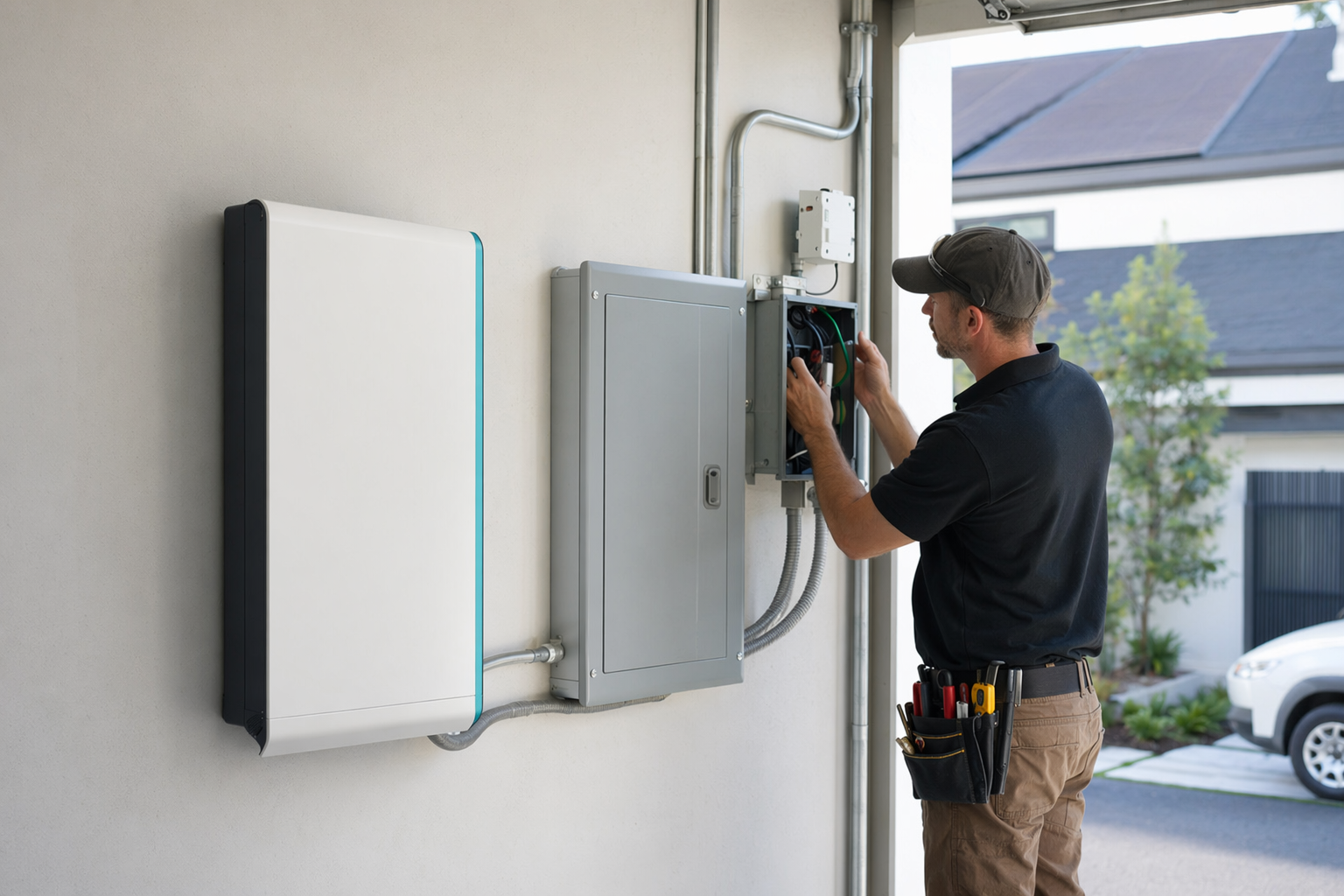
A solar-plus-battery system adds energy storage, measured in kWh, to a solar array sized in kW. The battery can store some solar production and, if designed that way, provide backup power to selected circuits or parts of the home during an outage. This setup is often considered by homeowners who want resilience, more control over when stored energy is used, or a way to keep essentials running for a number of hours.
The key point is that solar panels and batteries solve related but different problems. Solar is mainly about producing power when the sun is out. A battery is mainly about when that power is available and whether some loads can stay on if the grid goes down.
If you are still learning the basics, our guides and systems pages can help you understand the parts before you compare bids.

Cost, complexity, and what changes with a battery
In many cases, solar only costs less than solar plus battery because there is less equipment involved. A basic rooftop solar project might include panels, racking, wiring, and inverters. Adding a battery usually means more hardware, additional labor, and sometimes more electrical work. Real pricing varies by roof layout, system size, battery size, equipment, local labor, permit requirements, and incentives, so the numbers you see from installers should be treated as project-specific rather than universal.
A battery can also change the design conversation. Instead of asking only, "How many kW of solar should I install?" you also need to ask, "How many kWh of storage do I want, and what loads do I want backed up?" That can lead to choices about whether you want whole-home backup or just essentials like refrigeration, internet, lights, garage access, or a well pump. Backup duration depends on battery capacity, the loads selected, weather, and how much solar is still producing.
Solar only tends to be simpler to understand and compare. Solar plus battery usually requires more careful planning, more line items in the proposal, and more attention to scope. Before signing anything, ask for the equipment list, expected backed-up loads, whether backup is whole-home or partial, and how the system behaves during an outage.
Neither route should be treated as one-size-fits-all. The homeowner should compare bids, ask questions, and confirm scope, equipment, warranties, and final price in writing before work starts.
Backup power, grid outages, and daily use
This is where the difference becomes very practical. Solar only usually does not keep your home running during a grid outage. In most standard setups, solar shuts down when the grid goes down for safety reasons. That surprises a lot of homeowners. Panels on the roof do not automatically mean your refrigerator, lights, or outlets will work in a blackout.
A solar-plus-battery setup can provide backup, but only if it is designed for that purpose. Even then, backup is not unlimited. It is usually discussed in terms of kWh of battery capacity and hours of backup for essential loads, not broad promises. A smaller battery may keep a few key circuits on for several hours. A larger battery, especially paired with careful load management and daylight solar production, may support essentials longer. Heavy loads like central air conditioning, electric resistance heat, pool equipment, or EV charging can reduce backup time quickly unless the system is specifically sized around them.
On normal, non-outage days, some homeowners like the idea of stored energy that can be used later. Others decide they do not need that extra layer and would rather keep the system straightforward. The better fit depends on your outage history, comfort level, budget, and whether backup power is a priority or just a nice extra.
If resilience matters to you, ask installers to explain the backup plan in plain language: what stays on, for about how long under typical use, and what would cause the battery to drain faster.
Who may prefer each path
A solar-only system may be a better fit if:
- You want a lower-cost starting point
- Your main goal is to generate electricity from the roof
- Grid outages are rare where you live, or backup is not a priority
- You prefer a simpler project with fewer components
A solar-plus-battery system may be worth exploring if:
- You want backup for essentials during outages
- Your household depends on medical devices, refrigeration, internet, or a well pump
- You want more control over stored energy use
- You are comfortable evaluating a more complex proposal and higher total project cost
There is no universal winner. One homeowner may be happy with a straightforward solar array sized around daytime use. Another may decide the added cost of storage is reasonable because outage protection matters more than simplicity. Anonymized examples show both outcomes: one homeowner in an area with stable service chose solar only after deciding a generator already covered rare outages, while another homeowner with repeated storm-related outages chose solar plus battery to keep core circuits available for a limited number of hours.
If you want help comparing local options, Voltariva offers a free way to get matched with licensed local installers. Voltariva is not an installer and does not sell, finance, design, or install systems. When you submit a request, you agree to be contacted about your project. You should still verify license, insurance, warranties, equipment, and the written scope with any installer you consider.
In plain English
Choose solar only if you mainly want a simpler way to produce power from your roof, and look at solar plus battery if you also want backup for important parts of the house during outages.
Always hire licensed, insured installers — and verify the license, insurance, and warranties yourself.
Common questions
Does a solar-only system work during a power outage?
Usually no. Most standard grid-tied solar systems shut off during an outage for safety unless they include battery backup or other approved equipment designed for outage operation.
How big should a home battery be?
It depends on the loads you want to back up and for how long. Installers usually discuss battery size in kWh and estimate backup time for essentials based on your usage and system design.
Is solar plus battery always worth the extra cost?
Not always. It can make sense for homeowners who value backup power or added energy control, but others prefer the lower cost and simpler design of solar only.
What should I compare in proposals?
Compare system size in kW, battery capacity in kWh, backed-up loads, whether backup is whole-home or partial, equipment list, warranties, total price, timeline, and the installer's license and insurance.