Guides
Planning home battery backup
A home battery can keep important parts of your house running when the grid goes down, but the right setup depends on what you want powered, how long you want it to last, and whether you want backup for just essentials or most of the home.
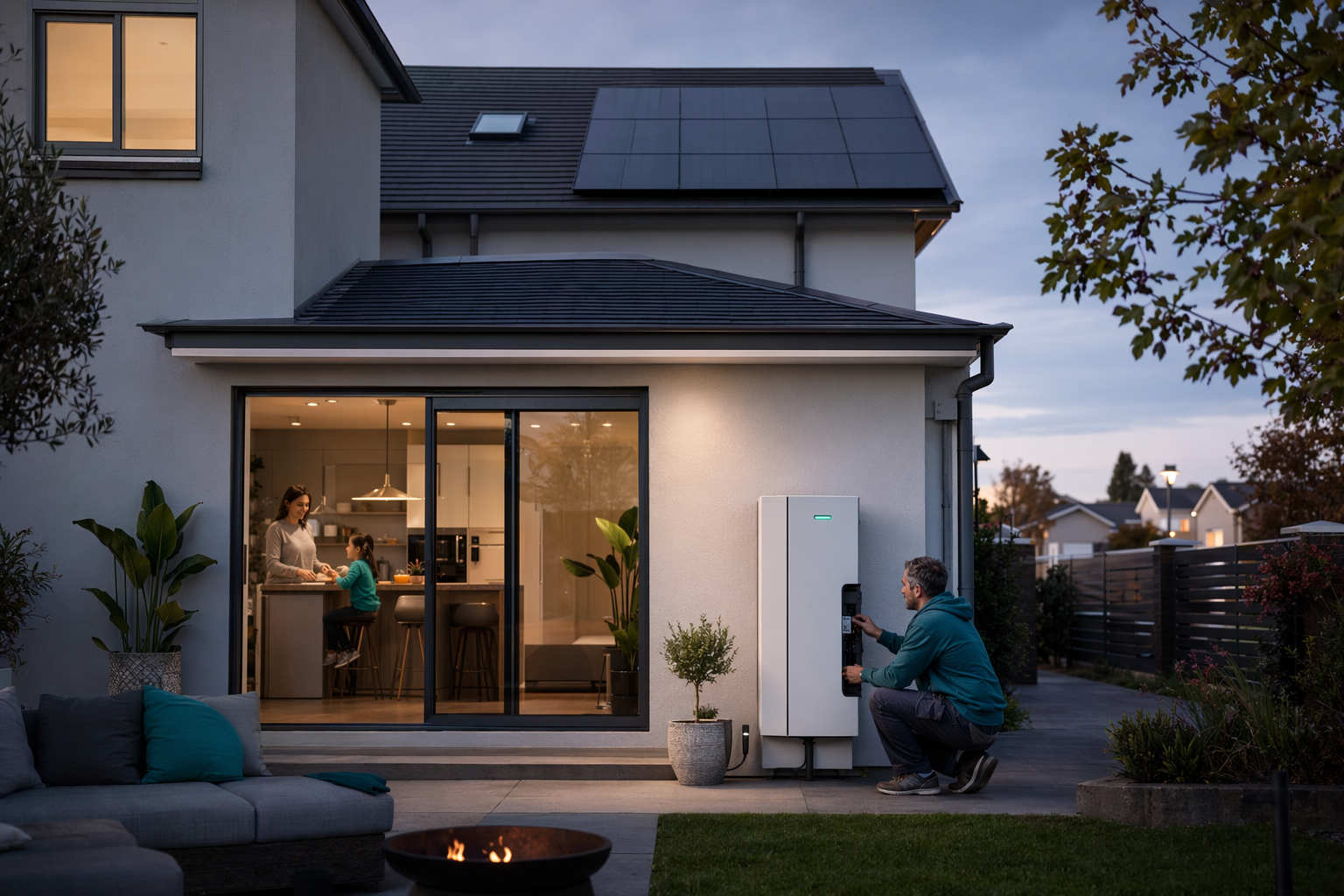
Start with what you want to keep on
Battery planning is easier when you begin with your must-have loads. Think about what matters during an outage: refrigerator, internet modem, a few lights, phone charging, medical devices, garage door opener, well pump, or part of your heating and cooling system. A battery is measured in kWh, which is stored energy, while appliances draw power at different rates over time.
Many homeowners do not need whole-home backup. A smaller battery setup may cover essentials for several hours, while a larger setup may support more circuits or longer outages. Whether that is practical depends on your panel setup, the size of the battery, your household usage, and whether rooftop solar can recharge it during daylight.
A simple way to think about it is:
- Essentials backup: fridge, lights, internet, outlets, and a few key circuits
- Partial-home backup: essentials plus selected larger loads
- Whole-home backup: most or all household loads, often requiring more battery capacity and careful load management
If you are still sorting out the basics, the articles in our guides can help you get familiar with system terms before you compare quotes.
How kWh turns into hours of backup
Battery capacity is usually listed in kWh. That tells you how much energy the battery can store. The number of hours of backup depends on how much electricity your chosen loads use. If your essentials average about 1 kW, then a 10 kWh battery might provide around 8 to 10 hours in a simple example. If your loads average 2 kW, that same battery may last closer to 4 to 5 hours. Real-world results vary because batteries are not usually run from 100% to empty, and some power is lost in conversion.
Large appliances change the picture quickly. Central air conditioning, electric resistance heat, ovens, dryers, and pool equipment can use a lot of power and may require a larger battery bank, soft-start equipment, or a decision to leave those circuits off during outages. Even if the battery has enough total kWh, it also needs enough power output to start and run the equipment.
When you talk with local installers, ask them to show your battery plan in real units:
- Battery storage in kWh
- Expected backup for your chosen circuits in hours
- Which appliances can run at the same time
- Whether heavy loads need to be excluded or managed
That written load plan matters more than a general promise that a battery will power "the house." You should confirm the backed-up circuits, equipment model, and expected runtime range in writing before work starts.
Battery with solar vs battery without solar
A battery can provide outage backup even without solar, as long as it starts charged. In that case, you are using stored electricity until the battery runs down, and then the backup period ends. For some homeowners, that is enough for short outages or overnight essentials.
Pairing a battery with rooftop solar installation can extend usefulness during longer outages because solar may recharge the battery during the day, depending on weather, season, shade, and how much electricity the home is using at the same time. That does not mean unlimited backup. Cloud cover, winter production, and high household demand can all reduce how much recharge is available.
This is why it helps to decide what problem you are solving. If your main goal is to keep food cold, stay connected, charge devices, and run a few essential circuits, a modest battery setup may be enough. If you want air conditioning through a long summer outage or broad whole-home coverage, the design often becomes larger and more expensive.
A local licensed installer can tell you whether your current electrical setup, panel, and roof condition support the type of solar-plus-battery system you want. Voltariva does not install systems or set pricing. We are a free matching service that helps homeowners compare local options.
Questions to ask before you choose a battery setup
Battery quotes can look similar at first, but the details matter. Ask each installer what is included, what circuits are backed up, and whether the proposal is for one battery or multiple batteries. Have them explain estimated runtime as a range, not a guarantee, because real results depend on the season, your usage, equipment settings, and outage conditions.
You should also ask how the system behaves in a real outage. Some systems back up only selected loads, while others can support more of the home through a dedicated subpanel or advanced controls. If you have a well pump, sump pump, medical device, electric vehicle charger, or electric heating equipment, bring that up early so the installer can evaluate starting loads and priority circuits.
A practical checklist:
- Which circuits are backed up, exactly?
- Total battery capacity in kWh?
- Expected runtime range for my essentials in hours?
- Can it recharge from solar during an outage?
- What appliances cannot run, or cannot run together?
- What equipment and warranties are included?
- Is the installer licensed and insured in my area?
- What is the total written price before work begins?
If you want help getting started, you can get matched with licensed local installers through Voltariva at no cost. When you submit a request, you agree to be contacted about your project. You compare bids, choose the installer if you want to move forward, and verify license, insurance, scope, equipment, warranties, and price in writing.
In plain English
Pick the appliances that matter most, ask for battery size in kWh and backup time in hours, and compare written quotes from licensed local installers before you decide.
Always hire licensed, insured installers — and verify the license, insurance, and warranties yourself.
Common questions
How big should a home battery be?
It depends on what you want to power and for how long. A setup for essentials may need much less capacity than a setup intended to cover large appliances or most of the home.
Can one battery run my whole house?
Sometimes for smaller homes or short periods, but many homes need load limits or multiple batteries for broad whole-home backup. Large heating, cooling, and cooking loads can change sizing a lot.
How many hours of backup will I get?
That depends on battery capacity in kWh and how much electricity your selected loads use. Installers should give a runtime range for your actual circuits, not a blanket promise.
Do I need solar to have battery backup?
No. A battery can provide backup without solar if it is charged. Solar may help recharge the battery during daylight, but output depends on weather, season, roof conditions, and home usage.