Quick answers
Can I add a battery to existing solar?
Yes, in many cases you can add a battery to an existing solar system. The right setup depends on how your current solar was installed, whether you want backup during outages, and how much of your home you want the battery to support.
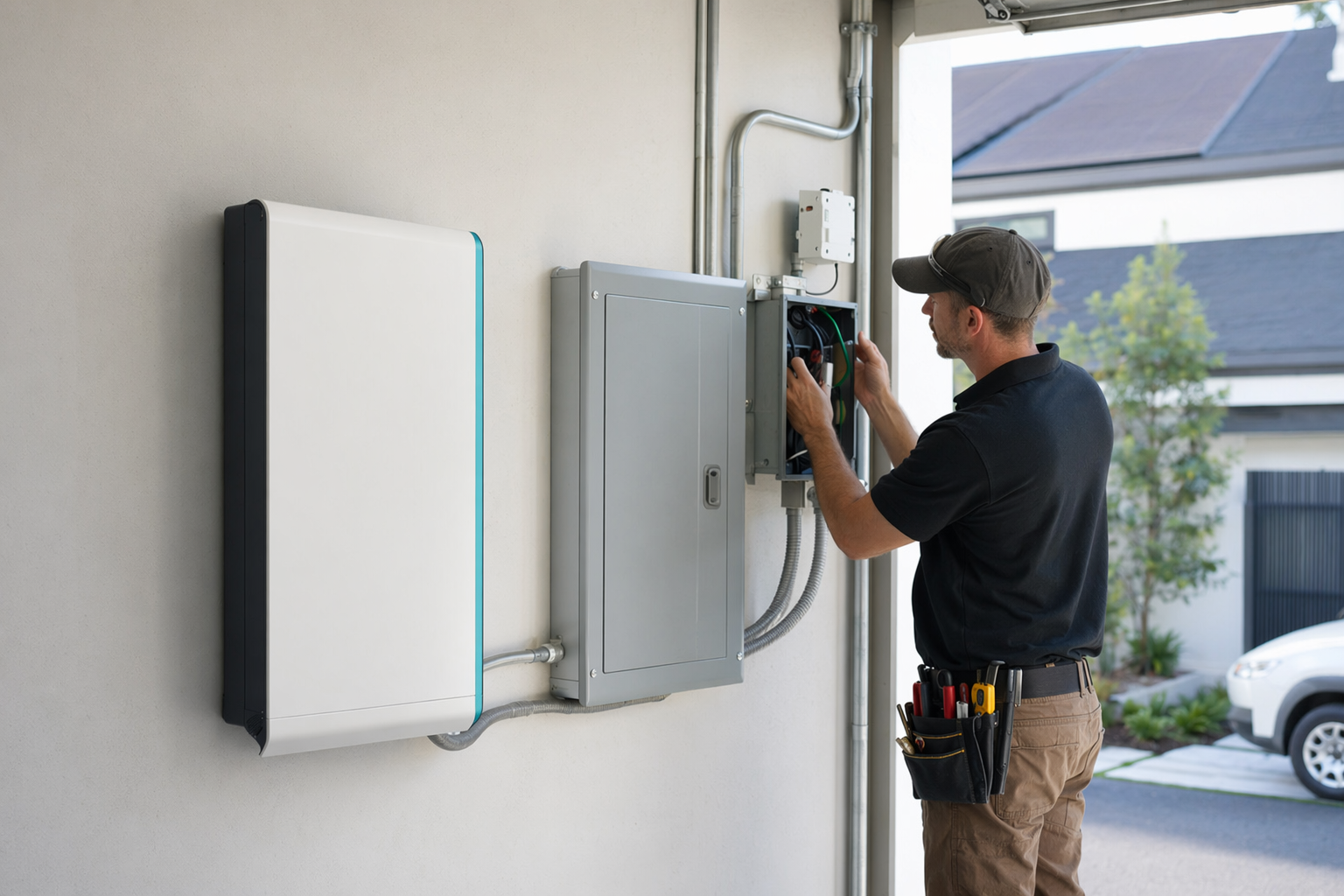
How adding a battery to existing solar usually works
Most battery add-ons fall into one of two paths: AC-coupled or DC-coupled. In plain terms, that means the new battery either connects alongside your existing solar equipment or ties in more directly with a newer solar-and-battery setup. Many existing home systems use an AC-coupled battery retrofit because it can be a practical way to add storage without replacing the whole solar array.
A battery is usually sized in kWh for storage capacity, while your solar array is sized in kW for production. A smaller battery might help cover a few essential loads for several hours. A larger setup may support more circuits, or longer backup time, depending on what is running. Backup time depends on your actual usage, not just the battery label.
If your main goal is outage backup, the installer will also look at whether you need a backup loads panel, transfer equipment, or other electrical upgrades. If your goal is more about using more of your solar power at night, the design may be different. The details matter, and they should be spelled out in writing before work starts.
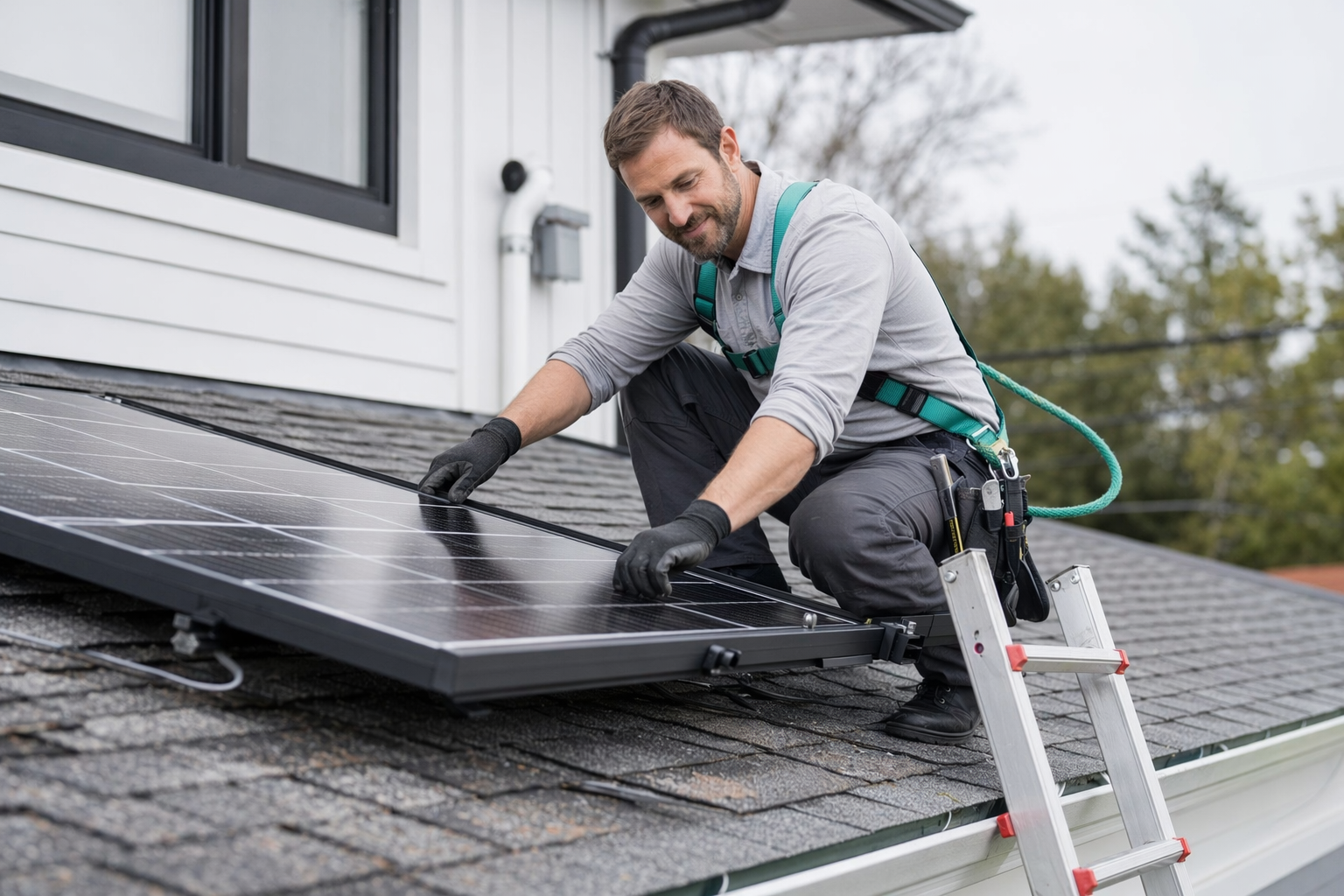
When a battery add-on is straightforward, and when it gets more complicated
A battery add-on is often more straightforward when your existing solar system is in good condition, your electrical service has enough capacity, and your equipment is compatible with a battery retrofit. That does not mean every system can take a battery easily, but many can.
It can get more complicated if your current inverter is older, your electrical panel is full, your utility has specific interconnection rules, or you want whole-home backup instead of backup for essential loads only. Roof condition can matter too. If the roof is near the end of its life, some homeowners choose to address that first so they do not have to revisit the solar setup later.
You may also need permits, utility approval, and inspection, depending on local rules. A licensed local installer can review the existing system, the main panel, and your outage goals to see what is realistic.
Helpful questions to ask include:
- Is my current solar equipment compatible with a battery add-on?
- Will I have backup during an outage, or just energy storage without backup power?
- Which circuits would be backed up, and for about how many hours?
- Do I need a panel upgrade, new inverter, or separate backup loads panel?
- What warranties apply to the battery, inverter, and installation labor?
What it may cost, and what affects the price
Adding a battery to existing solar can cost a few thousand dollars on the low end for smaller, simpler storage setups, and well into five figures for larger systems with backup equipment and electrical upgrades. A common residential battery range is often around 5 to 20 kWh of storage, but the right size depends on what you want to keep running.
Price depends on several factors, including:
- Battery capacity in kWh
- Whether the battery is AC-coupled or DC-coupled
- Existing inverter compatibility
- Need for backup loads panel or transfer equipment
- Electrical panel upgrades or rewiring
- Permit, inspection, and utility requirements
- Labor rates and incentive rules in your area
If you want a sense of system sizing before you talk to installers, how to size a solar system can help with the basics. For batteries, it is smart to think in terms of essential loads and hours of backup, not just the biggest battery you can buy.
Ask each installer for a written proposal that shows equipment, battery capacity in kWh, backed-up circuits, warranty terms, monitoring, estimated timeline, and total price. That makes it easier to compare bids on the same scope instead of just comparing one number.
How to shop carefully and avoid surprises
Start with your goal. Some homeowners want backup for the refrigerator, internet, lights, and a few outlets for several hours. Others want longer backup or coverage for more circuits. Those are very different projects, and the cost and equipment can change a lot.
Then get more than one quote from licensed, insured local installers. Ask them to inspect the existing solar equipment, confirm whether your system can be retrofitted, and explain any tradeoffs. Make sure they identify what happens during an outage, what the battery will and will not power, and whether any part of the current solar system needs replacement.
Before you sign anything, confirm in writing:
- Battery size in kWh
- Whether the battery provides outage backup
- Which circuits are included
- Any electrical upgrades required
- Permit and utility steps
- Equipment and labor warranties
- Total installed price and payment terms
Voltariva is a free matching service that helps homeowners understand the basics and reach licensed local installers. Voltariva does not sell, finance, design, or install solar or batteries. If you want help comparing your options, you can get matched or visit help. When you submit a request, the service is free and you agree to be contacted about your project.

In plain English
Yes, you often can add a battery to existing solar, but the right setup, backup performance, and price depend on your current equipment, your electrical system, and what you want the battery to power.
Always hire licensed, insured installers — and verify the license, insurance, and warranties yourself.
Common questions
Can any existing solar system have a battery added?
Not every system, but many can. Compatibility depends on your inverter, electrical setup, utility rules, and whether you want outage backup or just stored energy for later use.
Will a battery keep my whole house running during an outage?
Sometimes, but not always. Many battery systems are designed to back up essential loads only. Whole-home backup usually requires more battery capacity, more power capability, and sometimes additional electrical work.
Do I need to replace my current solar inverter?
Maybe. Some battery add-ons work with existing equipment, while others need a new inverter or extra hardware. A licensed installer should confirm compatibility after looking at your system.
How much backup time does a home battery provide?
It depends on the battery size in kWh and what you run during the outage. A battery may cover essentials for several hours, while larger setups can last longer if loads are managed carefully.