Systems
Home EV charger installation
A home EV charger can make daily charging simpler, but it also adds a meaningful electrical load to your house. If you are also looking at rooftop solar or a home battery, it helps to understand how the charger fits with your panel capacity, your driving habits, and what you want backed up during an outage.
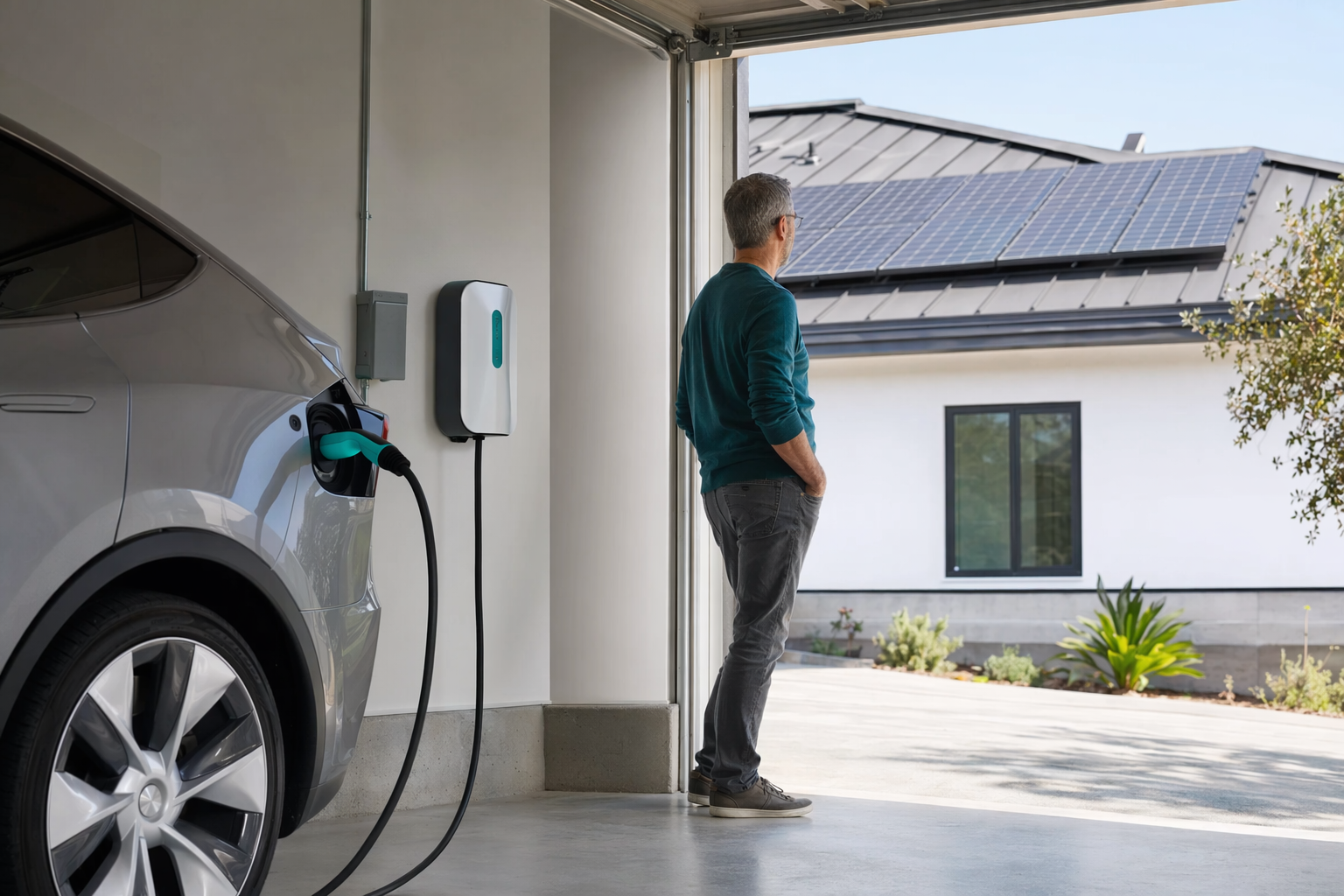
What a home EV charger does
Most homeowners choosing a faster home charger are talking about a Level 2 charger. Instead of plugging into a standard 120-volt outlet, a Level 2 charger uses a 240-volt circuit, similar to other larger household equipment. That higher voltage lets the car charge faster, usually overnight or during a planned daytime window.
The actual charging speed depends on the charger rating, the car, and the circuit size. Many home setups fall somewhere around 3.8 kW to 11.5 kW, though some homes may support more and some less. In plain terms, a charger in that range can draw as much power as several major appliances running at once.
That is why EV charging should not be looked at by itself. A licensed electrician or installer should review your panel, service size, available breaker space, wiring path, and how the charger will interact with other large loads such as air conditioning, electric water heating, cooking, solar inverters, or a battery system.
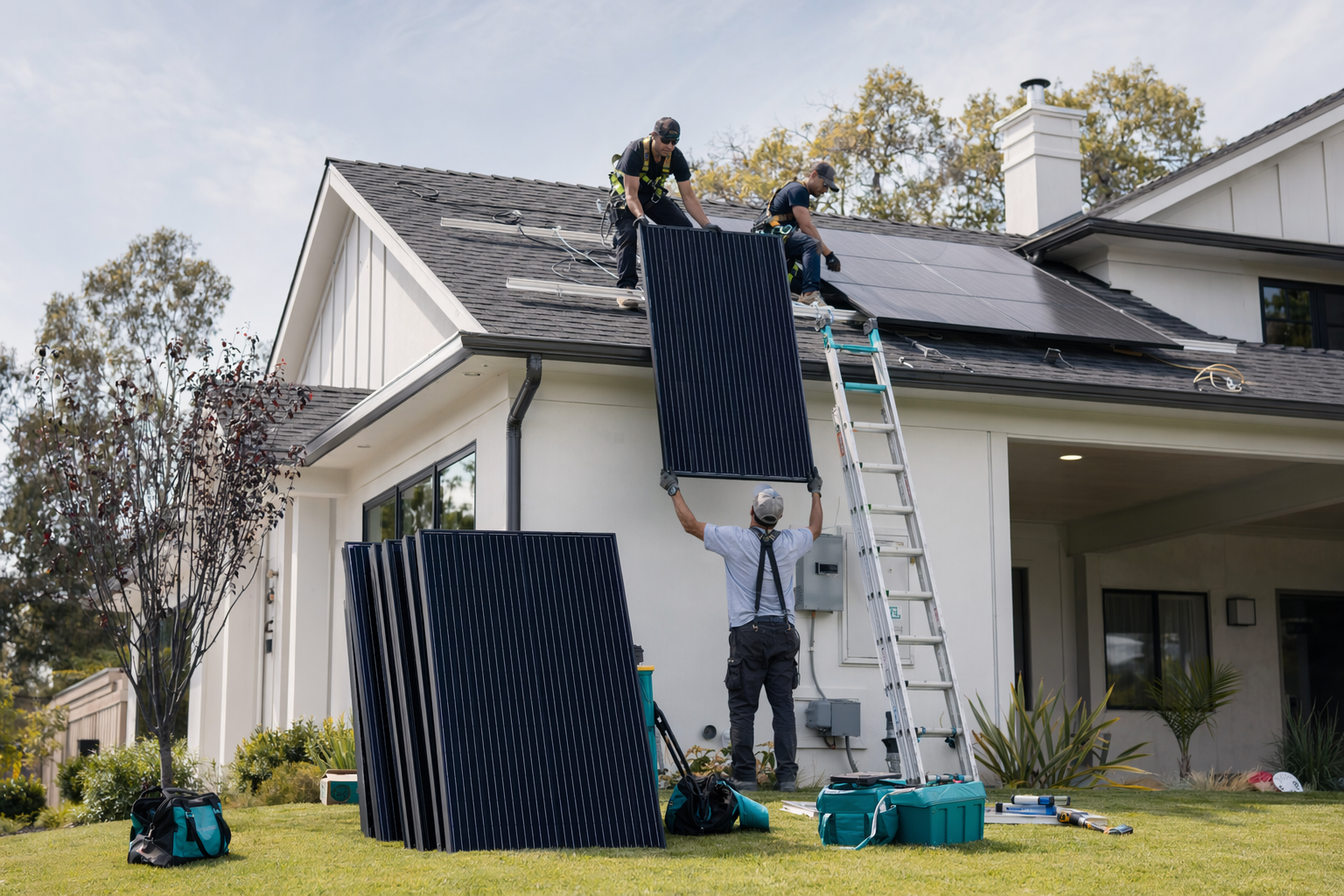
How EV charging affects solar sizing
If you want solar and plan to charge an EV at home, the charger may increase the amount of electricity you use over the course of a month. That can affect the size of the solar system you want quoted. Solar systems are typically discussed in kW, and the right size depends on your current electric use, expected driving, roof space, shading, local utility rules, and whether you want to offset only part of your usage or more of it.
A common mistake is sizing solar from old utility bills without considering the EV. If the car will mostly charge at home, your usage profile may change. Some homeowners end up looking at a larger solar range after adding expected EV charging, while others decide a smaller system still fits their budget and goals.
If you are early in the process, our plain-language overview of systems can help you understand how solar, batteries, and home electrical equipment fit together. The main point is simple: your charger can be part of the plan, but it should be included in the numbers from the start.
Panel capacity, load calculations, and when upgrades come up
Before a Level 2 charger is installed, a licensed electrician should perform a load calculation. This is the practical check that helps determine whether your electrical service and panel can safely support the added charger load along with the rest of the home. The answer is not just about the age of the panel. It depends on service size, existing circuits, demand patterns, and code requirements.
Some homes can add a charger with a new dedicated 240-volt circuit and little else. Others may need a subpanel, load management equipment, or a full service or panel upgrade. If you are also adding solar or a battery, the design team may need to coordinate equipment locations, breaker space, and interconnection details.
A few things usually need to be checked:
- main service size and panel rating
- available breaker space
- distance from panel to charger location
- garage, driveway, or exterior mounting conditions
- whether solar, batteries, or other large loads are already installed
- local permit and inspection requirements
Costs for this work vary widely. A straightforward charger circuit may cost far less than a project that also needs trenching, panel work, or service upgrades. If you want a broader sense of what can affect pricing, see costs. Real quotes should always spell out scope, equipment, permits, warranty terms, and any upgrade work in writing.
Pairing an EV charger with a home battery
A home battery stores electricity in kWh, and during an outage it is usually meant to support selected household loads for a certain number of hours. In many homes, the backup plan focuses on essentials such as refrigeration, lights, internet, outlets, and sometimes part of heating or cooling. An EV charger can use a lot of power, so it is often treated separately from those essential backup loads.
That does not mean the charger and battery cannot work together. It means the system should be designed with realistic expectations. For example, one homeowner might want the battery to cover evening household use while solar helps recharge during the day, with EV charging scheduled for times that make sense for the system. Another homeowner may decide the battery is mainly for outage resilience and not for charging the car.
Ask each installer to explain, in plain language, how the charger interacts with the battery controls, backup panel, and solar production. If backup matters to you, ask what the battery is expected to run, for roughly how many hours of essentials, and whether EV charging is included, limited, or excluded during outages. Those details should be confirmed in writing before work begins.
How to compare quotes and use a free matching service
When you compare quotes for a home EV charger, solar, or battery project, try to compare the same scope. One bid may include permit handling, charger mounting hardware, a longer wiring run, load management equipment, or panel work, while another may not. That is why the lowest number on page one is not always the best value.
Ask each licensed, insured installer or electrician to show:
- charger power rating in kW and circuit size
- whether panel or service upgrades are included
- where the charger will be mounted and how the wiring will run
- permit and inspection responsibilities
- warranty terms for workmanship and equipment
- how solar and battery equipment, if any, will integrate with the charger
Voltariva is not a contractor and does not sell, design, finance, or install equipment. We are a free matching service that helps homeowners understand the basics and reach licensed local installers or electricians. You stay in control of the decision, compare bids yourself, and choose who to hire.
If you want help getting started, you can get matched at no cost. By submitting a request, you agree to be contacted about your project. Before signing anything, verify the company is licensed and insured, read the warranty terms, and make sure the full scope, equipment, price range, and any upgrade work are clearly listed in writing.
In plain English
A home EV charger can work well with solar and a battery, but the right setup depends on your panel capacity, driving needs, and a clear written quote from a licensed local installer.
Always hire licensed, insured installers — and verify the license, insurance, and warranties yourself.
Common questions
Do I need a panel upgrade to install a Level 2 EV charger?
Not always. Some homes have enough capacity for a new 240-volt circuit, while others need load management, subpanel work, or a service upgrade. A licensed electrician should verify this with a load calculation.
Can rooftop solar charge my EV?
It can help offset the electricity used for charging, but the result depends on your solar system size in kW, your driving and charging habits, roof conditions, local utility rules, and when charging happens.
Can a home battery run my EV charger during an outage?
Sometimes, but many backup setups prioritize essential home loads instead. Because EV charging can draw several kW, ask what the battery can support in kWh and how many hours of essentials it is designed to cover.
Does Voltariva install EV chargers?
No. Voltariva is a free matching service, not an installer. We help homeowners understand their options and connect with licensed local professionals. When you submit a request, you agree to be contacted about your project.